
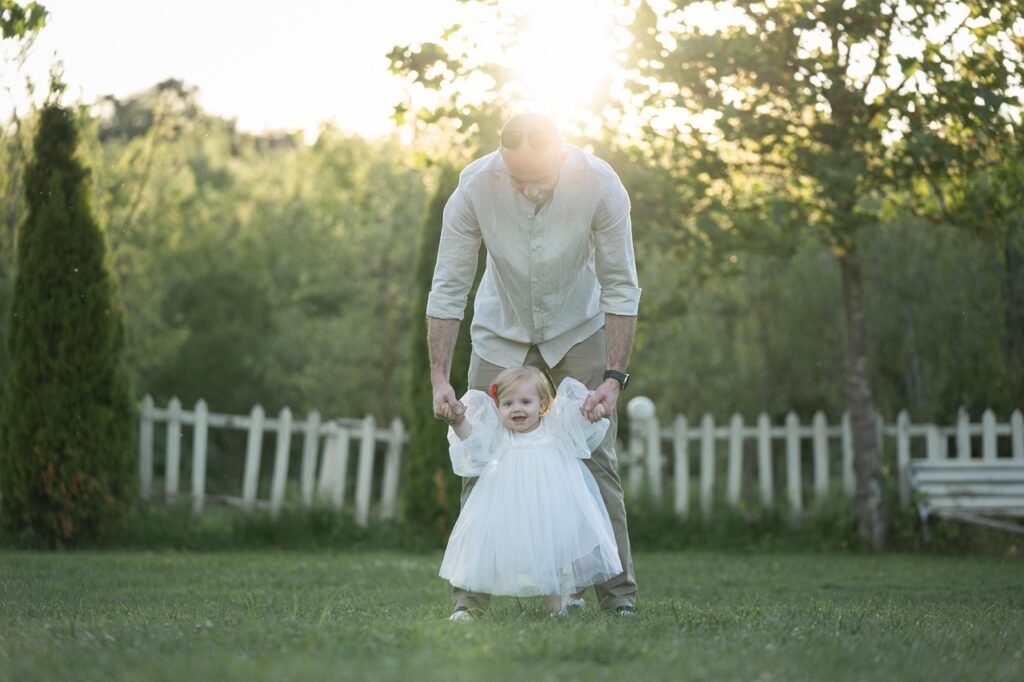
An Indian man whose wife is an accepted refugee in Canada is facing deportation with the couple’s five-year-old son in what lawyers say is a troubling new practice of separating the families of people with protected status.
Lawyers warn the case may signal a shift, with refugee families increasingly at risk of separation

Verity Stevenson · CBC News
·

Listen to this article
Estimated 6 minutes
The audio version of this article is generated by AI-based technology. Mispronunciations can occur. We are working with our partners to continually review and improve the results.
An Indian man whose wife is an accepted refugee in Canada is facing deportation with the couple’s five-year-old son in what lawyers say is a troubling new practice of separating the families of people with protected status.
Ravi Chauhan and his young son are set to be deported Monday, leaving his wife, who is the child’s mother, behind in Canada without the possibility of seeing her family for what could be years while they await permanent residency.
Lawyers and advocates say Chauhan’s case reflects a broader change in which border officials are increasingly deporting the spouses and children of protected persons who were previously allowed to remain while applications were processed.
Family faces deportation after routine check-in
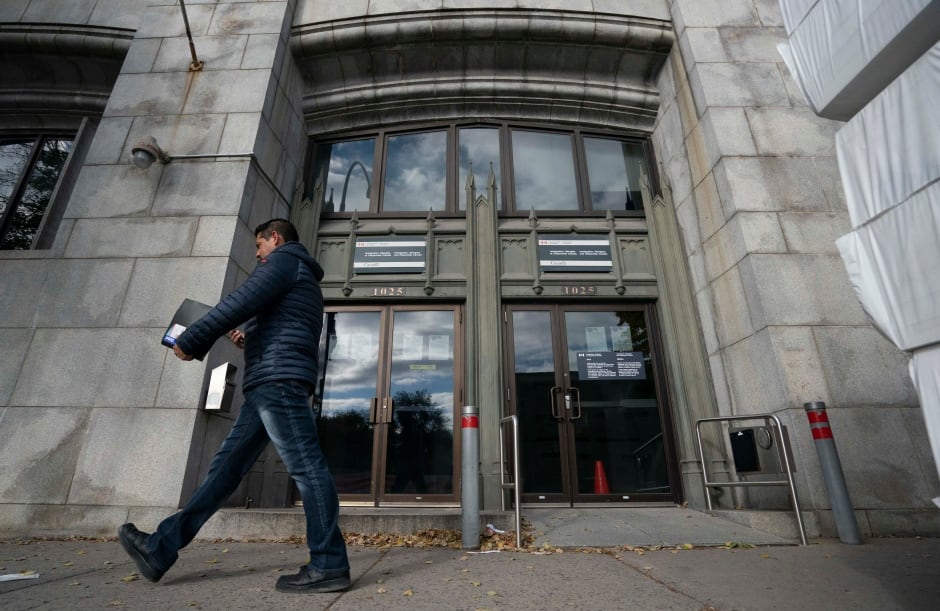
When Ravi Chauhan received a notice to report to a Canada Border Services Agency (CBSA) office in Montreal earlier this month, he expected a routine check-in. Instead, officers raised deportation and took him into a separate room, setting his son into a panic.
“I can’t live without my child,” his wife said through tears Wednesday. “My son needs his mother. No one can take care of him like I can.”
Chauhan’s lawyer, Stewart Istvanffy, said it is the first time in three decades of practice that he has seen a refugee’s immediate family face removal.
“There is no possible justification for the [CBSA] wanting to deport the family of recognized convention refugees,” he said.
“There’s no public interest in being so callous and cruel with this family.”

Lawyers warn of growing trend
Until recently, families of protected persons were allowed to stay in Canada while awaiting decisions on their permanent residency applications, according to several lawyers and advocates CBC News spoke with.
CBSA did not respond to CBC News’s request for comment by publication time.
But Chauhan’s case, along with other recent deportation cases, are raising concerns that Canadian border officials are increasingly separating refugee families.
Maryse Poisson of the Montreal Welcome Collective said she has seen two similar cases in the past week.
“This is unheard of and it should absolutely not happen,” she said.
CBC News has agreed not to identify the woman because she fears retaliation in India. The family fled in 2023 after she was attacked and threatened, and she was granted refugee status in September 2024.
CBC News has also viewed footage of a group of men visiting the family’s home in the Indian state of Haryana in late February, and has agreed not to reveal the details of the woman’s claim because of the threats the family faces.

Deportation would upend child’s life in Canada
Refugees are not allowed to return to their home country while awaiting permanent residency, and Chauhan and his son would be unlikely to obtain visas to return to Canada if deported. Permanent residency delays in Quebec are about 10 years, according to Immigration, Refugee and Citizenship Canada’s (IRCC) processing times website.
Chauhan was detained for 48 hours while his wife scrambled to find $4,000 to post his bail. Their son became ill outside the CBSA office and again the next day at school, with no clear sense of when his father would return.
Chauhan’s wife, who was a nurse in India, is worried about her son’s health, citing allergies and a recent rash.
The couple’s son, who was two when the family arrived in Canada on visitor visas, has been learning French and English at a Montreal school. He talks about his friends every day and is eager to see them each morning, Chauhan said. His teacher describes him as a quick learner.
Caroline Blais, a social worker at Doctors of the World Canada, said she has observed a marked rise in the number and pace of removals by CBSA, including an increase in family separations.
“There is nothing banal about a child facing deportation or the separation from a parent who is going to be deported,” Blais said. “It is extremely traumatizing.”
Chauhan and his wife met and fell in love while she was caring for his mother as a nurse. They married five years later in 2020. The family relies on Chauhan’s job at a Montreal Tim Hortons, while his wife, who continues to suffer pain and trauma from her experiences in India, cares for their son.
“Sometimes at night she cries. I care for her. I take care of her,” Chauhan said. “If I’m not here, who will take care of my wife?”

Advocates call for policy change
Anne-Cécile Khouri-Raphael, a Montreal-based immigration lawyer, is working on another case involving a Mexican woman who is the wife of a protected refugee and the mother of a 20-month-old Canadian-born child.
Khouri-Raphael said the cases highlight “a hardening that we’re seeing at every level … to deport more quickly and more abruptly.”
“Everyone thinks it’s normal to implode a family,” she said. “Family is at the heart of immigration law, and isn’t refugee protection about family reunification? … It’s a little absurd.”
She added that most, if not all, dependants of refugees will eventually receive permanent residency, making deportations a misuse of resources.
“Why inflict this violence on them?” she said.
Gwendolyn Muir, a colleague of Khouri-Raphael and an immigration lawyer, said the CBSA is “deporting more people than we have ever seen.”
Lawyers and advocates are calling on Immigration, Refugees and Citizenship Canada (IRCC) to create a policy to prevent similar family separations.
In an emailed statement, IRCC spokesperson Jeffrey MacDonald said decisions to remove people from Canada are “not taken lightly.”
“Every individual facing removal is entitled to due process, but once all avenues to appeal are exhausted, they are removed from Canada in accordance with Canadian law,” MacDonald wrote.
Last year, the CBSA pledged to remove an additional 4,000 people by 2027.
ABOUT THE AUTHOR

Verity is a reporter for CBC in Montreal. She previously worked for the Globe and Mail, Toronto Star and the New Brunswick Telegraph-Journal.